Energy Benchmarking: Understanding Your Building's Performance
A guide to measuring, comparing, and improving building energy performance through data-driven benchmarking strategies.
Introduction
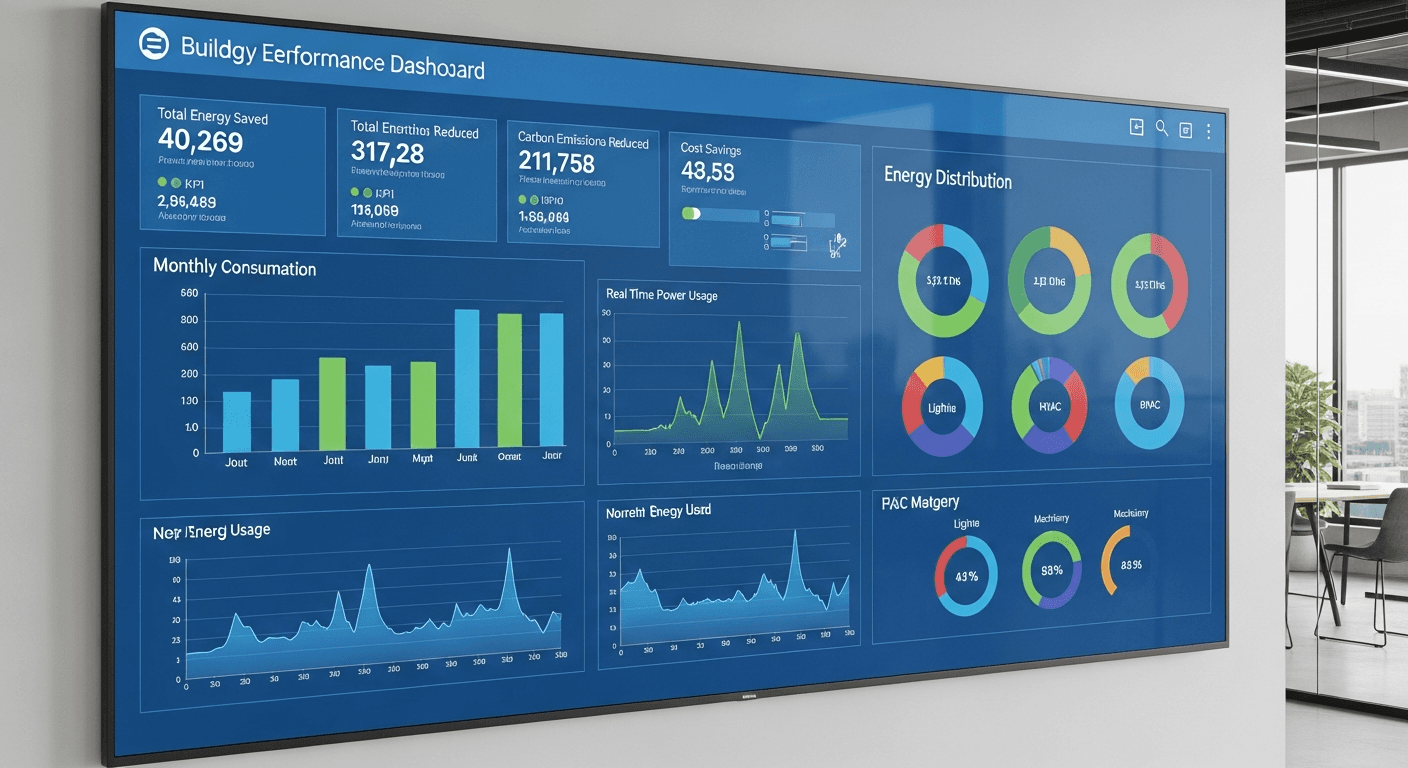
Energy benchmarking is the foundation of any building performance improvement program. By measuring energy use and comparing it to similar buildings, owners and operators can identify opportunities for improvement and track progress over time.
What Is Energy Benchmarking?
Energy benchmarking involves:
- Measuring building energy consumption
- Normalizing for factors like weather and occupancy
- Comparing to similar buildings or past performance
- Identifying opportunities for improvement
- Tracking progress over time
Key Metrics
Energy Use Intensity (EUI)
The most common benchmarking metric:
EUI = Annual Energy Use / Building Area
Typically expressed as:
- kBtu/sq ft/year (US)
- kWh/sq m/year (metric)
ENERGY STAR Score
For qualifying building types in the US:
- 1-100 score comparing to similar buildings
- 50 = median performance
- 75+ qualifies for ENERGY STAR certification
Carbon Intensity
Increasingly important metric:
- kgCO2e/sq ft/year or kgCO2e/sq m/year
- Reflects both energy use and fuel mix
Data Requirements
Utility Data
Gather complete energy information:
- Electricity consumption and demand
- Natural gas consumption
- District heating/cooling
- Other fuels (oil, propane)
Building Characteristics
Normalize for building features:
- Gross floor area
- Operating hours
- Building type and use
- Occupancy levels
Weather Data
Account for climate impacts:
- Heating degree days
- Cooling degree days
- Local weather station data
Benchmarking Tools
ENERGY STAR Portfolio Manager
The industry standard in the US:
- Free to use
- Covers most building types
- Required by many jurisdictions
- Enables certification
Other Platforms
- Building rating systems (LEED, BREEAM)
- Utility-provided benchmarking tools
- Commercial analytics platforms
Implementation Steps
Step 1: Gather Data
- Collect 12+ months of utility bills
- Document building characteristics
- Ensure data accuracy and completeness
Step 2: Enter and Analyze
- Input data into benchmarking platform
- Review initial scores and metrics
- Identify data quality issues
Step 3: Compare and Contextualize
- Compare to similar buildings
- Consider local factors
- Identify peer group performance
Step 4: Identify Opportunities
- Analyze high consumption periods
- Compare to high-performing peers
- Develop improvement hypotheses
Step 5: Track and Improve
- Monitor performance over time
- Measure impact of improvements
- Set performance targets
Common Pitfalls
Incomplete Data Missing utility accounts or periods leads to inaccurate results.
Incorrect Building Information Wrong square footage or operating hours skews comparisons.
Ignoring Context Unusual building uses or tenant types may not benchmark well.
One-Time Analysis Benchmarking value comes from ongoing tracking.
Beyond Basic Benchmarking
Sub-Metering
Understand consumption at system and tenant level:
- HVAC energy breakdown
- Tenant consumption allocation
- Base load analysis
Interval Data Analysis
Use hourly or 15-minute data for:
- Load profile analysis
- Peak demand management
- Anomaly detection
Predictive Analytics
Move from descriptive to predictive:
- Weather-normalized forecasting
- Consumption anomaly alerts
- Optimization recommendations
The CONTEXUS Platform
CONTEXUS provides comprehensive energy monitoring and benchmarking capabilities:
- Automated data collection from meters and utilities
- Real-time and historical energy analysis
- Portfolio-wide performance comparison
- Integration with ENERGY STAR Portfolio Manager
Conclusion
Energy benchmarking is the essential first step in any building performance program. By establishing accurate baselines and tracking progress over time, building owners can make informed decisions about efficiency investments and demonstrate results to stakeholders.