LoRaWAN for Digital Twins: Enabling Real-Time Building Intelligence
Discover how LoRaWAN technology enables comprehensive sensor coverage for digital twins, providing real-time building intelligence with extended range, ultra-low power consumption, and cost-effective deployment.
Introduction
Digital twin technology has transformed how we monitor and manage smart buildings, but its effectiveness depends entirely on the quality and reliability of sensor data feeding the virtual model. LoRaWAN (Long Range Wide Area Network) has emerged as a game-changing connectivity solution for digital twins, offering unique advantages in range, power efficiency, and deployment flexibility that traditional wireless protocols cannot match.
Why LoRaWAN for Digital Twins?
The Data Challenge
Digital twins require continuous streams of data from potentially thousands of sensors distributed throughout a building. Traditional connectivity solutions like WiFi or cellular present significant challenges:
- Infrastructure Costs: Extensive cabling or access point deployment
- Power Requirements: Frequent battery replacements or wired power
- Coverage Gaps: Signal penetration issues in complex building structures
- Scalability Limits: Network congestion with high device density
LoRaWAN Advantages
LoRaWAN addresses these challenges with a purpose-built architecture for IoT deployments:
- Extended Range: Up to 15km in rural areas, 2-5km in dense urban environments
- Deep Penetration: Signals penetrate concrete, steel, and underground structures
- Ultra-Low Power: Sensors can operate for 5-10 years on a single battery
- Massive Scalability: Single gateway supports thousands of devices
- Low Cost: Minimal infrastructure investment compared to alternatives
Key Applications for Smart Building Digital Twins
Environmental Monitoring
LoRaWAN sensors excel at capturing the environmental data essential for digital twin accuracy:
- Temperature and Humidity: Monitor HVAC zone performance across entire buildings
- CO2 Levels: Track air quality for occupant health and ventilation optimization
- Light Levels: Inform automated lighting and daylight harvesting strategies
- Particulate Matter: Detect air quality issues before they affect occupants
Structural Health Monitoring
Long-range, low-power characteristics make LoRaWAN ideal for structural monitoring:
- Vibration Sensors: Detect unusual building movements or equipment anomalies
- Strain Gauges: Monitor structural stress in critical load-bearing elements
- Crack Monitors: Track structural crack progression over time
- Tilt Sensors: Detect foundation settlement or structural shifts
Asset Tracking and Management
LoRaWAN enables real-time asset visibility within digital twins:
- Equipment Location: Track mobile assets like tools, wheelchairs, or carts
- Utilization Monitoring: Understand how spaces and equipment are actually used
- Maintenance Triggers: Detect when equipment requires service based on usage
- Inventory Management: Automate supply tracking and reordering
Utility Metering
Sub-metering capabilities feed critical data to digital twins:
- Electricity: Monitor consumption at circuit, floor, or tenant level
- Water: Detect leaks and track usage patterns
- Gas: Monitor consumption and detect anomalies
- Steam/Chilled Water: Track district energy consumption
Architecture for LoRaWAN-Enabled Digital Twins
Network Topology
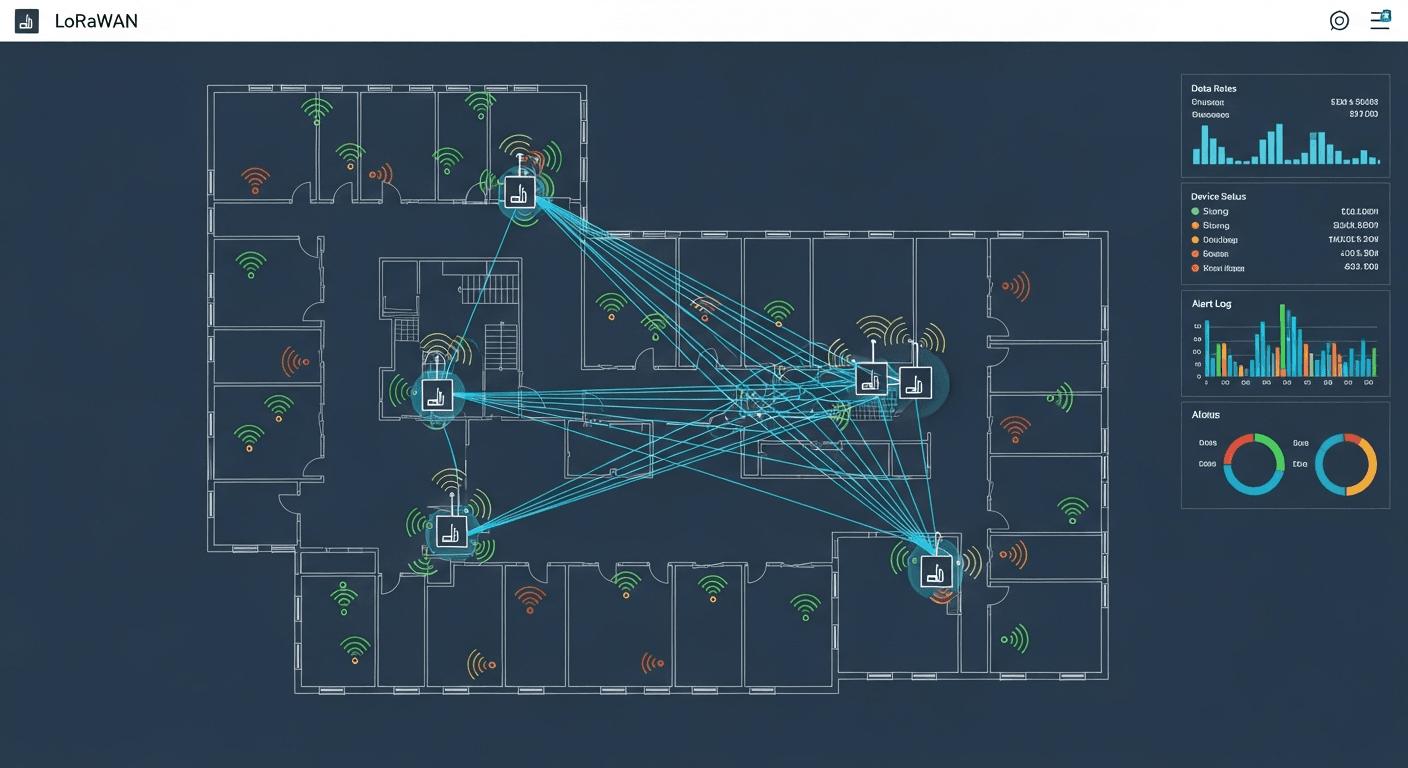
A typical LoRaWAN deployment for digital twins includes:
- End Devices: Battery-powered sensors deployed throughout the building
- Gateways: Receive LoRaWAN transmissions and forward to network server
- Network Server: Manages device communication and data routing
- Application Server: Processes data and feeds digital twin platform
- Digital Twin Platform: Visualizes and analyzes building performance
Gateway Placement Strategy
Optimal gateway placement ensures comprehensive coverage:
- Roof-Mounted Gateways: Provide excellent coverage for outdoor and upper floor sensors
- Basement Gateways: Capture signals from underground parking and mechanical rooms
- Core Gateways: Address coverage in building cores and elevator shafts
Data Flow Optimization
Efficient data management ensures digital twin responsiveness:
- Adaptive Data Rates: LoRaWAN automatically optimizes transmission parameters
- Confirmed vs Unconfirmed Messages: Balance reliability against battery life
- Payload Optimization: Minimize transmission size to extend battery life
- Edge Processing: Pre-process data at gateway level when possible
Implementation Best Practices
Sensor Selection
Choose sensors designed for long-term deployment:
- Industrial-Grade Housing: IP65 or higher for harsh environments
- Replaceable Batteries: Avoid sealed units that require complete replacement
- Calibration Capabilities: Enable periodic accuracy verification
- Standards Compliance: Ensure LoRaWAN Alliance certification
Network Security
Protect your digital twin data pipeline:
- End-to-End Encryption: LoRaWAN provides AES-128 encryption by default
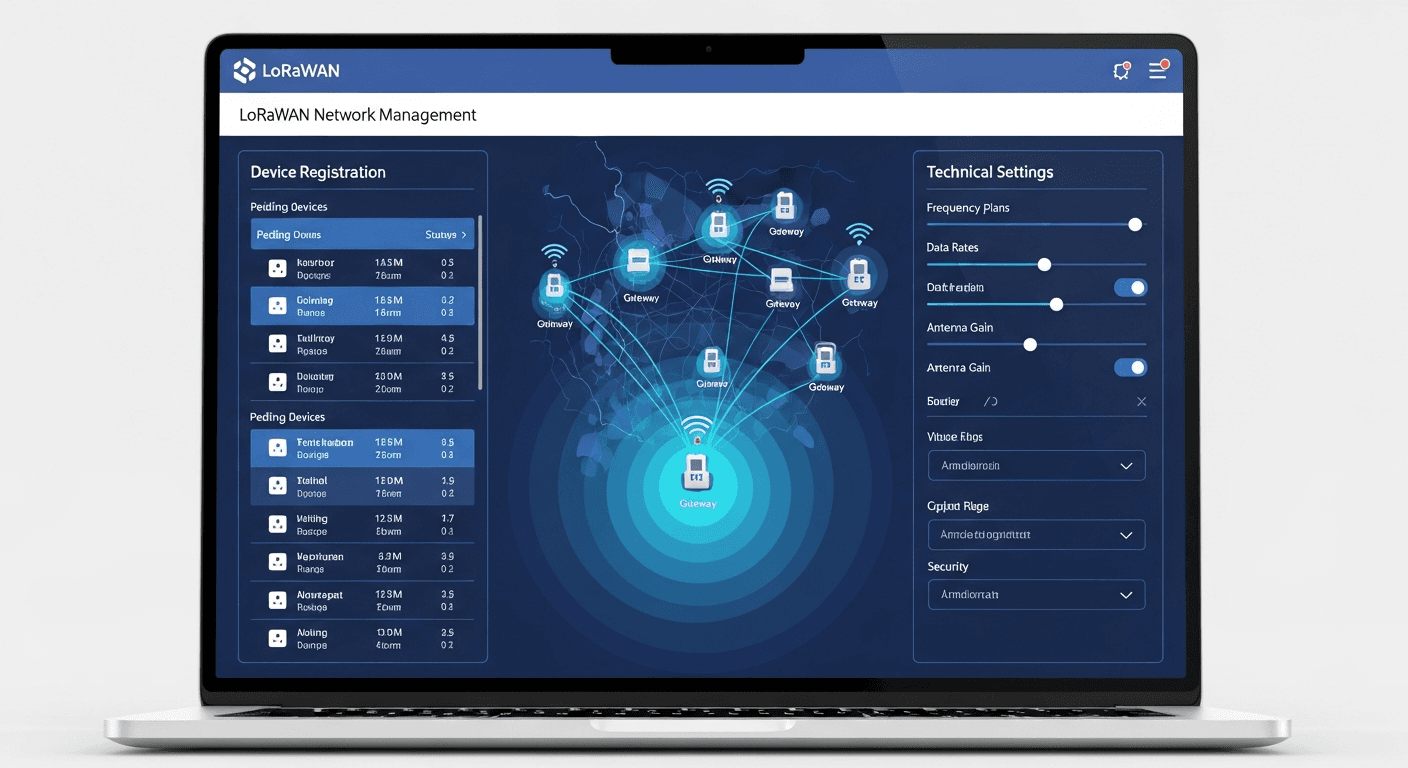
- Device Authentication: Implement OTAA (Over-The-Air Activation) for secure onboarding
- Network Segmentation: Isolate LoRaWAN traffic from critical building systems
- Regular Audits: Monitor for unauthorized devices or unusual traffic patterns
Integration with Digital Twin Platforms
Ensure seamless data flow to your digital twin:
- Standard Protocols: Use MQTT or REST APIs for platform integration
- Data Normalization: Transform raw sensor data into standardized formats
- Timestamp Synchronization: Ensure accurate time correlation across all data sources
- Historical Storage: Maintain data archives for trend analysis and machine learning
Case Study: Commercial Office Building
Challenge
A 50-story commercial office building needed to create a digital twin for energy optimization but faced challenges with existing WiFi infrastructure congestion and high costs for wired sensor deployment.
Solution
Deployed a LoRaWAN network with:
- 3 indoor gateways providing complete building coverage
- 500+ environmental sensors across all floors
- 200+ smart meters for tenant sub-metering
- 50+ occupancy sensors in common areas
Results
- 85% Reduction in sensor deployment costs vs. wired alternatives
- Real-Time Visibility into building conditions across all floors
- 15% Energy Savings through digital twin-enabled optimization
- 5+ Year Battery Life reducing maintenance requirements
Future Developments
LoRaWAN Evolution
The LoRaWAN standard continues to evolve:
- LoRaWAN 1.1: Enhanced security and roaming capabilities
- Long Range - Frequency Hopping Spread Spectrum (LR-FHSS): Increased capacity for dense deployments
- Firmware Updates Over-The-Air: Remote sensor management and updates
AI Integration
Machine learning enhances LoRaWAN-enabled digital twins:
- Predictive Maintenance: Analyze sensor patterns to predict equipment failures
- Anomaly Detection: Identify unusual conditions requiring investigation
- Optimization Algorithms: Continuously improve building performance
Conclusion
LoRaWAN represents an ideal connectivity solution for digital twin deployments in smart buildings. Its combination of long range, low power consumption, and cost-effective infrastructure enables comprehensive sensor coverage that would be impractical with traditional wireless technologies. As digital twin adoption accelerates, LoRaWAN will play an increasingly critical role in delivering the real-time data streams that make virtual building models truly valuable for operations optimization, predictive maintenance, and occupant comfort.